Woodland Tactics: Using Terrain to Your Advantage
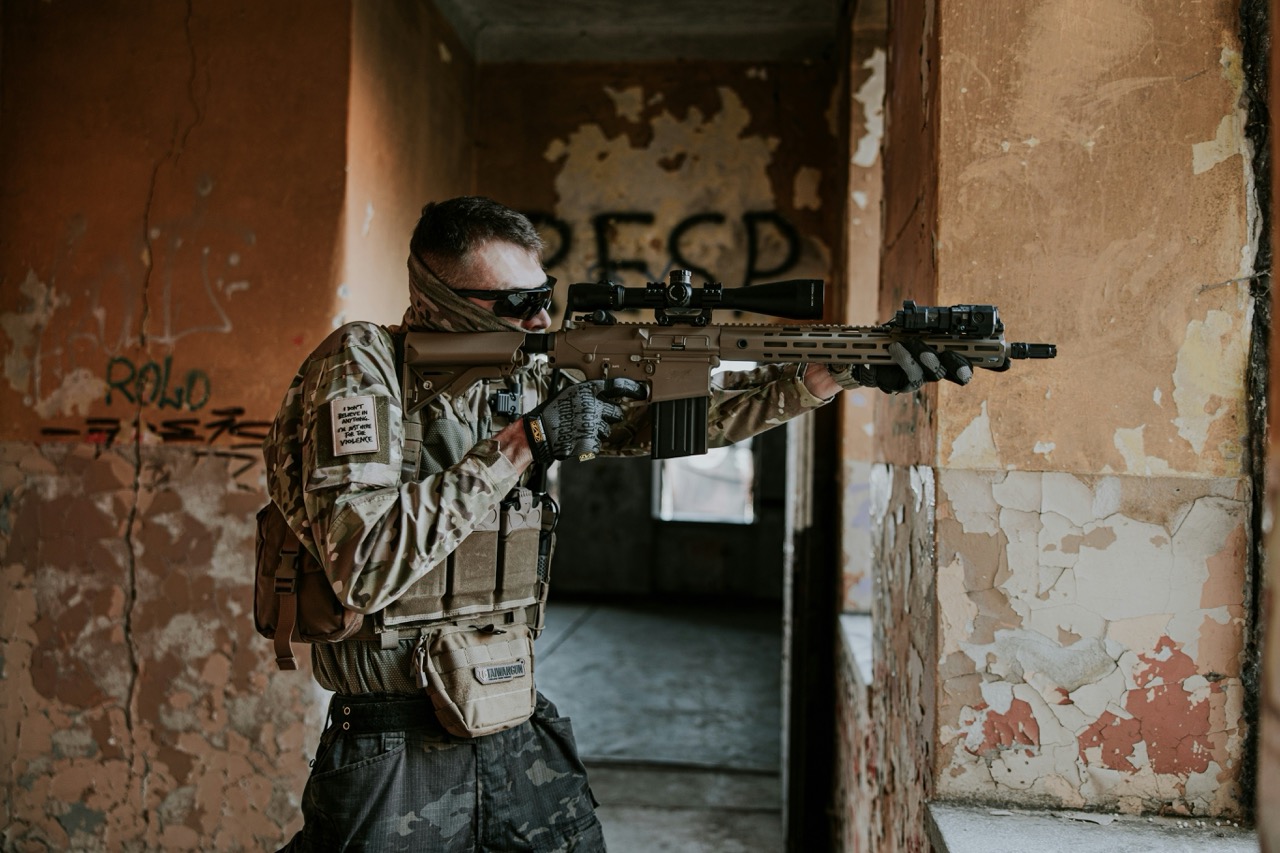
Open woodland fields reward players who read terrain deliberately far more than players who simply react to what's directly in front of them. The same handful of terrain factors that infantry doctrine trains soldiers to evaluate before moving through unfamiliar ground apply just as directly to a Saturday game in the woods.
A Simple Terrain Framework
The U.S. Army's ATP 3-21.8 teaches a memorable framework for reading terrain often referred to by the acronym OAKOC: observation and fields of fire, avenues of approach, key terrain, obstacles, and cover and concealment. You don't need the military shorthand to get value from the idea; walking a woodland field and asking these same questions before a game starts, or even during a lull, will change how you move through it.
Observation and Fields of Fire
Elevated ground, tree lines bordering open fields, and any position with a long unobstructed sightline are natural places to observe from or to avoid crossing carelessly. Before advancing across an open area, identify where an opponent with a clear view could be watching from, and plan your route to minimize time spent exposed to that specific line of sight.
Avenues of Approach
Trails, streambeds, and natural gaps in dense brush function as avenues of approach, routes that let a team move faster but that are also the routes most likely to be watched or defended. Using an avenue of approach that isn't the obvious one, a slower but less predictable route through denser terrain, often trades speed for surprise, which is frequently the better trade in a defended objective scenario.
Key Terrain
Key terrain is any feature whose control gives a meaningful advantage, a hill overlooking an objective, a chokepoint bridge, or the one clear firing lane into an enemy's flag position. Identifying key terrain before a round starts, rather than stumbling onto its importance mid-game, lets a team plan around controlling or denying it deliberately.
Obstacles
Dense brush, fallen trees, streams, and steep slopes all slow movement and channel it into predictable paths. Obstacles aren't purely a hindrance; a team that understands how an obstacle will funnel an approaching opponent can position to cover that funnel effectively, turning the obstacle into a tactical asset rather than just an inconvenience.
Cover and Concealment
Woodland terrain offers abundant concealment, most vegetation hides you from view, but genuine cover capable of stopping a BB is comparatively rare: mature trees, earth berms, rock outcroppings, and man-made structures if the field includes them. Knowing which specific features on your field qualify as real cover versus mere concealment should shape where you choose to make a stand versus where you simply pass through.
Putting the Framework to Use
- Walk or study the field layout before the game, if allowed, and mentally note observation points, chokepoints, and real cover
- Reassess terrain factors as the game develops; key terrain can shift as objectives change or as one team gains ground
- Share terrain observations with your squad rather than keeping a mental map to yourself
Reading terrain this way turns an unfamiliar woodland field into a set of understandable tactical decisions rather than an intimidating, undifferentiated stretch of trees.
Terrain Changes Meaning as the Game Develops
A piece of terrain's tactical value isn't fixed for the whole match; it shifts as objectives, team positions, and the overall flow of the game change. A hill that was irrelevant early in a round can become key terrain the moment it overlooks a contested objective later on. Reassessing the field periodically, rather than locking in a single mental map at the start and never updating it, keeps your read of the terrain accurate as the situation actually develops rather than as it looked twenty minutes ago.
Using Weather and Light as Terrain Factors
Sun position, shadow, and weather conditions interact with terrain in ways worth factoring into the same framework. Moving with the sun at your back can put glare in an opponent's eyes at a chokepoint, while moving against it can silhouette you against open sky at exactly the wrong moment. Wet ground after rain changes which routes are quiet versus noisy underfoot, and morning fog or haze can extend the value of concealment well past where it would normally hold up in clear daylight. None of these are part of the classic terrain framework directly, but they modify how each factor actually plays out on a given day.
More from the blog
All posts →Essential Tools Every Airsoft Technician Should Own
A well-stocked toolbox turns gearbox surgery from a stressful gamble into a routine afternoon project.
August 26, 2026How to Clean and Maintain Your Airsoft Gun
A regular cleaning routine keeps your airsoft replica shooting straight and lasting longer, and most of it takes less time than a single game rotation.
August 25, 2026Radio Communication Basics for Airsoft Teams
A beginner-friendly introduction to using radios in airsoft: call signs, brevity, and the basic discipline that keeps a channel useful instead of chaotic.
August 24, 2026