Flanking Maneuvers: A Tactical Guide for Airsoft Players
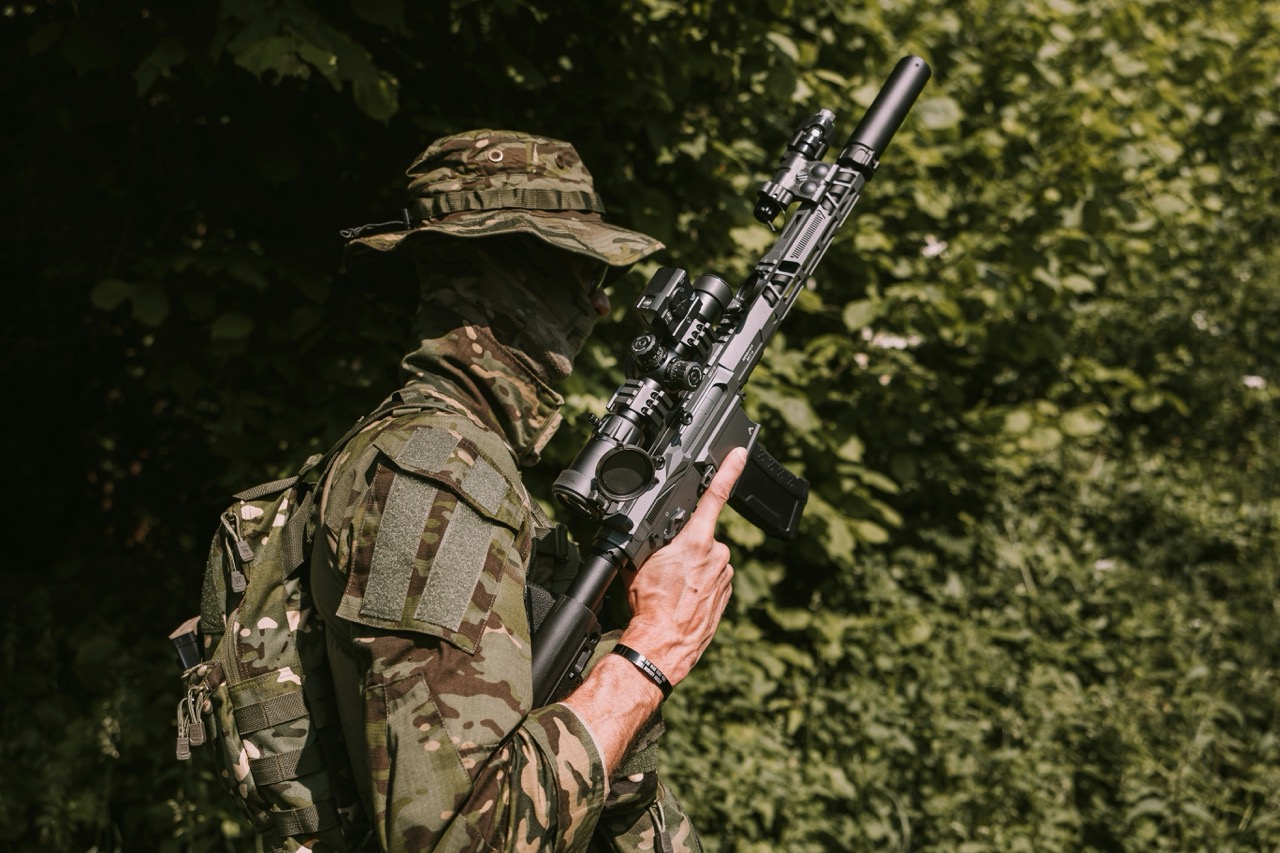
Trading shots head-on with an opponent behind their own cover is rarely the most efficient way to win an engagement; both sides are protected, both sides have to expose themselves to shoot, and the fight often just grinds until someone gets lucky or impatient. Flanking solves this by attacking from an angle the opponent's cover doesn't protect against, and it's one of the highest-value tactics a squad can learn to execute deliberately.
Why Flanking Works
Cover is directional. A wall, berm, or tree that fully protects someone from fire coming from one direction often does nothing for them from a different angle. A flanking element that reaches that exposed angle can engage an opponent who is still oriented toward the original threat and has no cover against the new one. This is exactly the logic behind envelopment as a maneuver described in the U.S. Army's ATP 3-21.8: fixing an opponent's attention with one element while a second element maneuvers to attack from a direction the opponent isn't positioned to defend against.
The Two-Element Structure
A flanking maneuver almost always needs two coordinated elements, not one squad simply repositioning as a whole. One element, the base of fire, stays engaged with the opponent from the original position, keeping their attention fixed forward and their heads down. The second element moves, often through concealment rather than open ground, to reach a position off to the side or behind the opponent's cover. Attempting a flank with a single element that just walks around the side, leaving no one applying pressure from the front, often just lets the opponent reorient and cover both directions before the flank arrives.
Timing and Communication
The flanking element needs to know roughly when it has reached a usable position, and the base-of-fire element needs to know when the flank is about to engage, both to avoid friendly fire across the opponent's position and to potentially intensify suppression right as the flank opens up. This is exactly where the communication habits covered elsewhere, short callouts or a quick radio check, pay off; a flanking maneuver that succeeds tactically but results in confusion or crossfire between your own elements isn't actually a win.
Choosing a Flanking Route
- Use concealment, not open ground, for the flanking element's approach whenever possible, since a spotted flank loses its element of surprise entirely
- Avoid routes that cross the opponent's likely field of view, even briefly, since a flanking element seen mid-route often triggers a full reposition from the defender
- Pick a flanking angle wide enough that the opponent's cover genuinely doesn't protect against it; a shallow flank that's still mostly frontal doesn't solve the original problem
Flanking is a coordinated maneuver, not a solo hero play. A squad that practices the base-of-fire-and-flank structure together will consistently break stalemates that a squad without that coordination gets stuck in.
Reading When a Flank Is Actually Available
Not every stalemate has a viable flanking option; sometimes terrain genuinely limits movement to a narrow frontal approach, and forcing a flank anyway just exposes an element in the open for no gain. Before committing to a flanking maneuver, check whether real concealment or cover actually exists along a viable route to the opponent's exposed side. If it doesn't, other tools like suppressive fire and movement, or simply repositioning the whole team to a different approach entirely, may be a better use of time than a flank that has to cross open ground to reach its objective.
Defending Against a Flank
Understanding flanking from the defensive side matters just as much as executing one. A position that only accounts for a frontal threat is exactly the kind of setup a flanking maneuver is designed to exploit. Periodically checking your own flanks and rear, not just the direction you expect contact from, and maintaining at least some awareness of terrain that could support an enemy flank, closes off the exact opportunity a well-coordinated opposing squad is looking for.
More from the blog
All posts →Essential Tools Every Airsoft Technician Should Own
A well-stocked toolbox turns gearbox surgery from a stressful gamble into a routine afternoon project.
August 26, 2026How to Clean and Maintain Your Airsoft Gun
A regular cleaning routine keeps your airsoft replica shooting straight and lasting longer, and most of it takes less time than a single game rotation.
August 25, 2026Radio Communication Basics for Airsoft Teams
A beginner-friendly introduction to using radios in airsoft: call signs, brevity, and the basic discipline that keeps a channel useful instead of chaotic.
August 24, 2026