Understanding Fire and Movement in Team-Based Airsoft
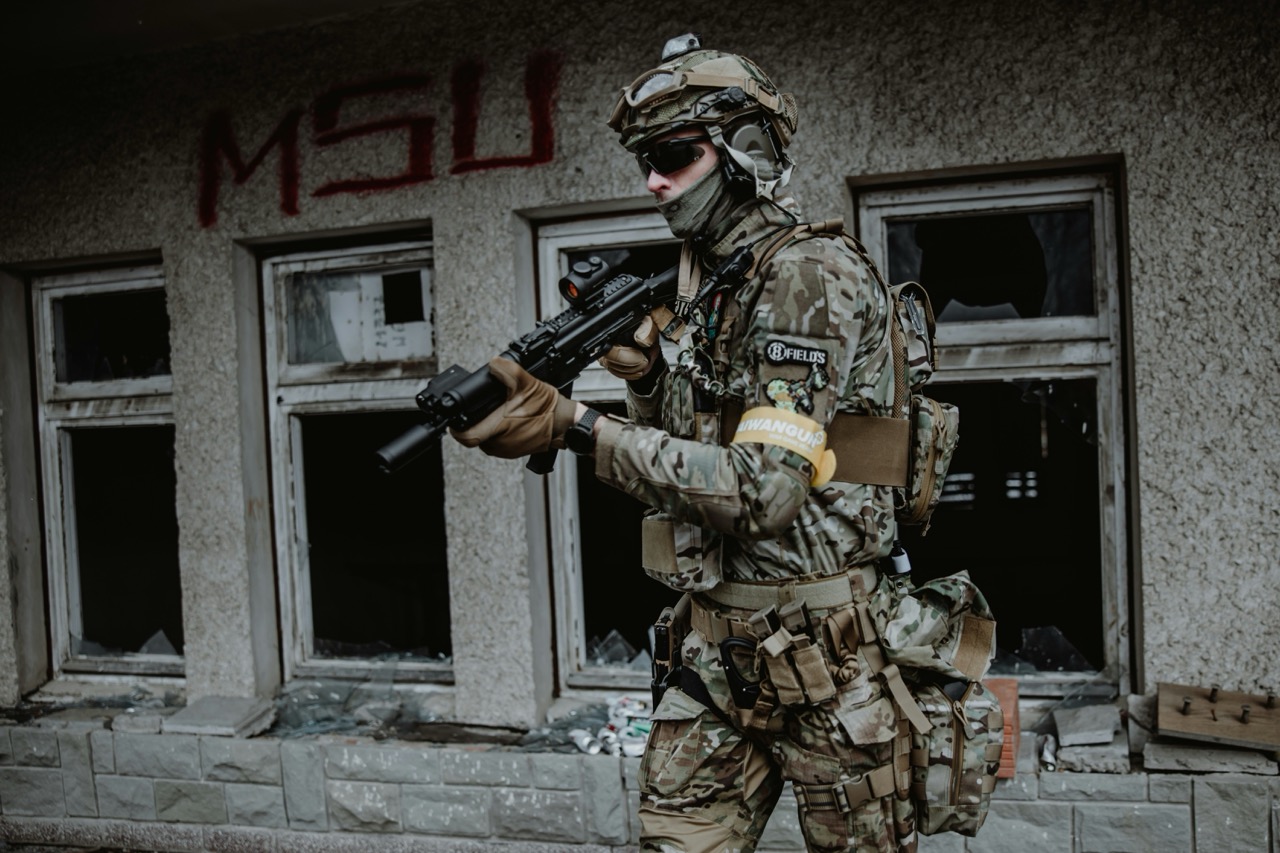
Almost every effective airsoft tactic, bounding overwatch, flanking, room clearing, ultimately comes back to the same underlying principle: one part of a team applies fire while another part moves. This idea, generally called fire and movement, is worth understanding directly rather than only through its more specific applications, since recognizing the pattern lets you apply it in situations no specific tactic quite covers.
The Basic Idea
The U.S. Army's ATP 3-21.8 describes fire and movement, sometimes called fire and maneuver, as the fundamental method by which a unit closes with an opponent: one element provides a base of fire that keeps the enemy suppressed and reactive, while a second element uses that suppression to move to a position of advantage, whether that's closer range, a flanking angle, or simply better cover. The two actions have to happen together; fire without a team using the opening it creates accomplishes little, and movement without suppressive fire covering it is far more exposed than it needs to be.
Why This Beats Standing and Trading Shots
A firefight where both sides simply exchange fire from fixed cover tends to stall, since neither side is willing to expose themselves to advance while under fire. Fire and movement breaks that stalemate deliberately: the base-of-fire element accepts the job of staying exposed enough to keep shooting while the moving element uses the resulting pressure to change the situation, either by closing distance, flanking, or reaching better cover. Whoever consistently uses this pattern will generally win engagements that would otherwise grind into a standstill.
Applying It at the Squad Level
- Before entering a firefight, decide who is providing the base of fire and who is moving; this decision should happen quickly, ideally before contact rather than being negotiated mid-engagement
- Keep the base-of-fire element's suppression continuous enough that the opponent doesn't get a free window to reposition or return effective fire at the moving element
- Communicate the moment the moving element reaches its new position, since roles often need to swap from there, with the mover becoming the new base of fire for a further advance
- Scale the technique down for two-person teams and up for full squads; the underlying logic works the same regardless of how many people are involved
A Mindset Shift Worth Making
New players often treat every engagement as an individual duel, shooting and hoping to win a direct exchange. Reframing engagements around fire and movement shifts the question from "can I win this shot" to "how does my team use this moment," which tends to produce both better individual outcomes and better overall squad performance, since a coordinated team applying this pattern consistently outperforms a group of skilled individuals acting independently.
Scaling the Pattern to Different Team Sizes
Fire and movement works at every scale, from a two-person buddy team to multiple fireteams operating together, and the version worth practicing first is the smallest one. Two players alternating base-of-fire and moving roles is a manageable way to build the instinct before trying to coordinate it across a full squad, where more moving parts and more communication are needed to keep the same basic pattern from breaking down into everyone doing their own thing.
When Not to Force It
Fire and movement assumes there's actually somewhere useful to move to, better cover, a flanking angle, closer range. If no such position exists, forcing a move just exposes the moving element without a meaningful payoff. Part of applying this pattern well is recognizing when a situation calls for holding a strong position and waiting instead, rather than mechanically trying to move simply because the concept says movement should be happening.
More from the blog
All posts →Essential Tools Every Airsoft Technician Should Own
A well-stocked toolbox turns gearbox surgery from a stressful gamble into a routine afternoon project.
August 26, 2026How to Clean and Maintain Your Airsoft Gun
A regular cleaning routine keeps your airsoft replica shooting straight and lasting longer, and most of it takes less time than a single game rotation.
August 25, 2026Radio Communication Basics for Airsoft Teams
A beginner-friendly introduction to using radios in airsoft: call signs, brevity, and the basic discipline that keeps a channel useful instead of chaotic.
August 24, 2026