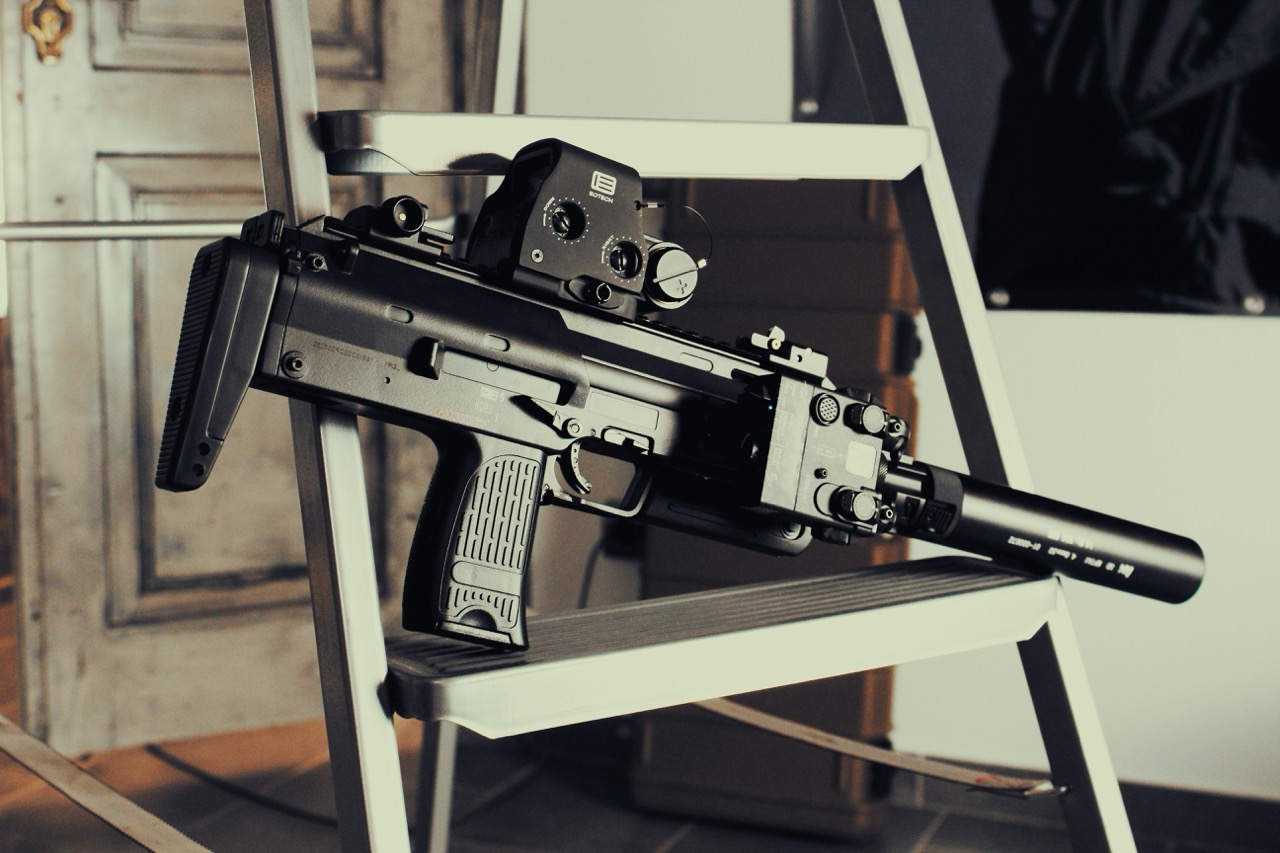
Airsoft is a team-based combat sport where players use replica firearms that fire small plastic BBs, usually 6mm in diameter, to tag opponents in objective-based games. Unlike laser tag, there’s a real projectile involved, and unlike paintball, that projectile is small, lightweight, and typically leaves no mark. The sport sits somewhere between military simulation and organized recreation, and it draws people in for wildly different reasons: some want the tactical puzzle-solving of capture-the-flag scenarios, others want to recreate historical loadouts, and plenty just want a Saturday spent running around outdoors with friends.
The Basic Concept
At its core, airsoft replaces the “you’re out” mechanic of tag with a physical hit confirmation. Players wear normal clothing or tactical gear, carry a replica gun powered by spring, gas, or an electric motor, and eliminate opponents by hitting them with a BB. Most games run on an honor system: if you feel a hit, you call yourself out, whether or not anyone saw it. That honesty is the glue that holds the whole hobby together.
Games are typically organized around scenarios rather than simple deathmatches. Common formats include capturing an objective, defending a base, escorting a VIP player, or running a multi-hour military simulation with respawn rules and mission briefings. Fields range from small indoor arenas built for fast, close-quarters play to sprawling wooded properties that support all-day operations.
Why Eye and Face Protection Isn’t Optional
Because airsoft involves projectiles fired at meaningful velocities, eye protection is treated as mandatory at essentially every organized field, not as a suggestion. This isn’t unique paranoia from the airsoft community; it reflects the same logic that governs eye safety in workplaces and other shooting-adjacent recreational activities. Research on sports-related ocular trauma has found that a large share of eye injuries in these settings are preventable with the correct protective equipment, and that shooting sports involving projectiles are associated with some of the more serious vision-threatening outcomes when protection is skipped, as summarized in a review of sports-related ocular injuries published through the National Institutes of Health. That’s why any credible field will require rated goggles or a full-seal mask before you step onto the field, no exceptions for “just watching.”
The standard most airsoft eyewear is built around, ANSI Z87.1, comes from the same body of consensus safety standards that OSHA references in its workplace eye and face protection regulation, which is a useful shorthand: if a piece of eyewear isn’t rated to that standard or an equivalent, it isn’t designed to stop a projectile impact, full stop.
Replica Firearms and the Law
Airsoft guns are designed to closely resemble real firearms, which is part of the appeal for military simulation players, but it also means they fall under specific consumer safety rules. In the United States, federal law requires toy, look-alike, and imitation firearms to carry a blaze-orange marking, typically a plug at the muzzle, so they’re clearly distinguishable from real weapons in public; the details are laid out in 15 U.S. Code § 5001. Most players remove this marking only once they’re on a field where its absence won’t cause confusion, and many keep it on entirely for transport and storage.
Who Plays, and Why
- Weekend hobbyists who enjoy a physical, social outdoor activity
- Milsim (military simulation) enthusiasts recreating historical units and operations
- Competitive speedsoft players running fast, CQB-style matches with minimal gear
- Collectors and tinkerers who enjoy building and customizing replica internals
There’s no single “correct” way to play. A newcomer’s first game might be a low-stakes local skirmish with rental gear, while a veteran player might be planning a weekend-long milsim event with a squad they’ve trained with for years. What ties it all together is the same baseline: safety equipment, a working knowledge of field rules, and a genuine respect for the honor system that makes the whole game function without referees watching every angle.
If you’re brand new, the best next step isn’t buying gear, it’s finding a local field, asking about rental options, and going to watch or play a single day before committing to anything. Everything else, from gun platforms to loadouts, makes a lot more sense once you’ve felt what a game actually looks like in person.
