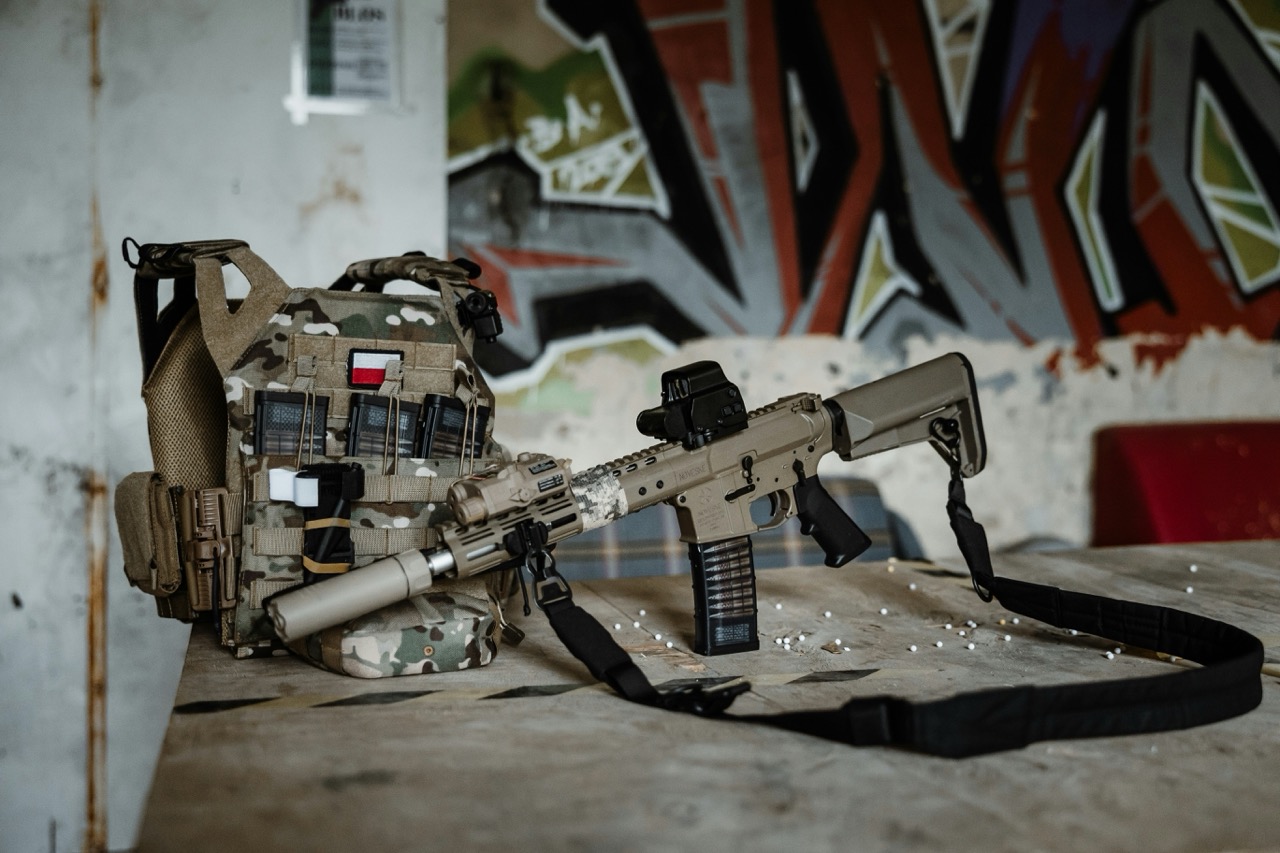
Gas Blowback replicas are prized for one thing above all else: they cycle. Unlike an AEG’s electrically driven piston stroke, a GBB uses stored gas pressure to actually move the slide or bolt backward and forward with every shot, producing genuine felt recoil that a spring-and-motor system can’t replicate on its own.
The Core Mechanism
A GBB magazine holds a reservoir of compressed gas, commonly green gas (a propane-based blend) or, in some setups, CO2 capsules. When the trigger releases the hammer, it strikes a valve on the magazine, releasing a metered charge of gas. That gas does two jobs simultaneously: it propels the BB down the barrel, and it drives the slide or bolt rearward against a return spring, which then snaps back forward, chambering the next BB (on blowback pistols) or resetting the hammer for the next trigger pull (on many blowback rifles). This entire cycle happens in a fraction of a second and is what produces the recoil sensation GBB replicas are known for.
Gas Types and Their Tradeoffs
- Green gas: A propane-based blend with added lubricant, widely used and generally gentle on internal seals thanks to its lubricating additive
- CO2: Delivers noticeably higher pressure and more forceful cycling, but with less built-in lubrication and, on some platforms, harder-hitting recoil that accelerates wear
- Propane (unblended): Sometimes used by players seeking a specific pressure curve, though without the lubricant additive found in purpose-made green gas
Why Temperature Matters So Much
Gas pressure is directly temperature-dependent: cold weather reduces the internal pressure of a gas magazine, which reduces both muzzle velocity and cycling reliability, sometimes causing a GBB to short-stroke or fail to fully cycle in cold conditions. This is the single biggest practical limitation of the platform compared to a battery-driven AEG, whose performance stays far more consistent regardless of ambient temperature.
Seals, O-Rings, and Maintenance
Because GBB systems rely on a series of rubber O-rings and seals to hold gas pressure throughout the magazine and internals, routine maintenance matters more here than on most AEGs. Regular light lubrication (often with a silicone-based oil compatible with the seal material) keeps O-rings supple and prevents the cracking that leads to gas leaks and weak, inconsistent shots. Skipping this maintenance is the most common reason a GBB’s performance degrades over a season of use.
Handling Gas Safely
Gas magazines are pressurized containers, and while airsoft-scale gas cartridges are small consumer items rather than industrial equipment, the same basic handling sense applies: don’t expose magazines to direct heat or leave them in a hot car, don’t overfill beyond the magazine’s rated capacity, and store spare gas canisters away from heat sources. This is simply a smaller-scale version of the caution behind OSHA’s general requirements for compressed gas handling in industrial settings, where the same underlying pressure and temperature risks apply at a larger scale. It’s also worth wearing rated eye protection while filling magazines or clearing a stuck valve, since a misdirected burst of gas or propellant at close range is exactly the kind of unexpected impact that eyewear built to standards like the one OSHA references for eye and face protection is designed to guard against.
Getting More Consistent Performance in Cold Weather
Because GBB performance is so closely tied to ambient temperature, players who regularly game through cooler months have developed a handful of practical workarounds rather than simply accepting degraded cycling. Keeping magazines in an inside jacket pocket between rounds, rather than in an outside pouch exposed to the cold, keeps the gas reservoir closer to body temperature and noticeably improves cycling consistency compared to a magazine left sitting in cold air. Some players also switch to a slightly higher-pressure gas blend for cold-weather sessions specifically to compensate for the pressure loss, though this should only be done within what the platform’s seals are rated to handle, since overpressurizing a magazine built for a lower-pressure gas can shorten seal life or cause a leak. None of these workarounds fully eliminate cold weather’s effect on a GBB, but they meaningfully narrow the performance gap compared to an AEG on a cold field day.
Why Players Choose GBB
Despite the added maintenance and cold-weather limitations, GBB remains the platform of choice for players who prioritize realistic handling and recoil feedback, particularly for sidearms carried alongside a primary AEG or for milsim loadouts built around historical or modern realism. The tradeoff between authenticity and convenience is really the whole story of this platform.
