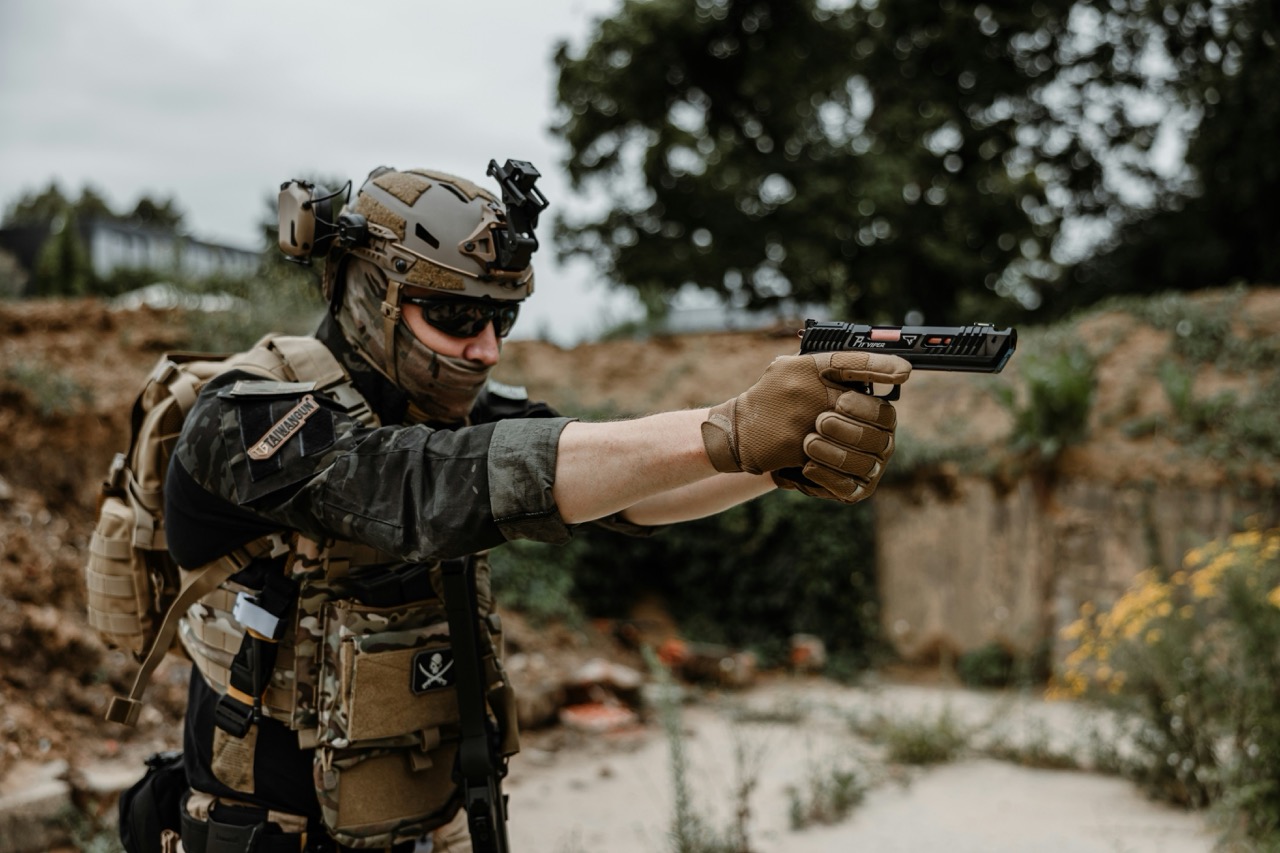
High Pressure Air systems represent a fundamentally different approach to firing a BB compared to either AEGs or GBBs: instead of a spring-driven piston or a chemical gas reaction, HPA uses a small compressed air tank feeding a regulator and an electronically controlled solenoid valve to release a precise, repeatable burst of air on every trigger pull.
The Basic Architecture
A typical HPA setup consists of a small carbon-fiber or aluminum air tank (often worn on the body or mounted to the replica itself), a regulator that steps the tank’s high pressure down to a usable, stable output pressure, a line running that regulated air to the replica, and a solenoid valve inside the replica that opens briefly on each shot to release the air pulse. A control board, often programmable, governs solenoid timing, which is what makes HPA systems so tunable.
Why Competitive Players Favor HPA
- Shot-to-shot consistency: A regulated air pulse doesn’t vary shot to shot the way a mechanical spring’s release can, especially as spring tension in a traditional gearbox degrades over time
- Adjustability: Many HPA control boards let players fine-tune FPS, rate of fire, and trigger response curve without swapping physical parts
- Reduced mechanical wear: Without a reciprocating spring and piston slamming forward on every shot, certain wear points common to gearbox-driven AEGs are eliminated entirely
- Programmable safety limits: Some boards allow FPS to be locked to a specific field’s limit electronically, reducing the chance of an accidental over-limit reading at chronograph
The Tradeoffs
HPA isn’t without downsides. Setups are typically more expensive to assemble than a comparable AEG, require an external air source you’re responsible for keeping filled (usually via a scuba-style tank or a specialized compressor), and introduce more points of failure, lines, fittings, and o-rings, that need periodic inspection. Fields also vary in whether they permit HPA at all, so checking field policy before investing in a setup is essential.
Handling Compressed Air Tanks Responsibly
Because HPA depends on a genuinely pressurized air tank, treating that tank with real care matters. Keep it away from direct heat and out of hot vehicles, never attempt to service or disassemble a regulator or tank valve without proper training, and have tanks inspected or hydro-tested according to their rated schedule. These aren’t airsoft-specific rules; they reflect the same fundamental caution behind OSHA’s general industry standard for compressed gas cylinders, which requires visual inspection and proper handling procedures for any pressurized cylinder in a workplace setting. The scale is very different, an airsoft tank is a small consumer item, not an industrial cylinder, but the underlying physics of stored pressure and heat sensitivity doesn’t change with size.
Eye Protection Still Applies Fully
Because HPA-driven replicas can be tuned to shoot with extremely consistent, often higher-end velocities within a field’s allowed range, the same rated eye protection requirements that apply to every other platform apply here with zero exception. The standard reputable eyewear is built to traces back to the same consensus safety framework OSHA references in its eye and face protection regulation.
Choosing a Tank Size and Fill Method
Air tank choice is a practical decision separate from the regulator and solenoid setup, and it’s worth thinking through before buying. Smaller tanks are lighter and less obtrusive to carry through a full day of play but need refilling more often, while larger tanks reduce refill frequency at the cost of added bulk and weight on your person or replica. Fill method matters just as much as size: a dedicated scuba-style tank refilled at a dive shop or specialty retailer is simple but means planning refills around that shop’s hours, while a personal compressor offers refill independence at a meaningfully higher upfront cost. Many players starting out with HPA begin with a smaller tank and shop-based refills to keep the initial investment manageable, then upgrade to a larger tank or personal compressor once they’re confident they’ll stick with the platform long-term.
Is HPA Worth Adopting?
For casual players, an AEG remains simpler and cheaper to run day to day. For players chasing competitive consistency, particularly in speedsoft, HPA’s tunability and shot reliability are genuinely hard to match, provided you’re willing to take on the added responsibility of managing a compressed air source safely.
