Understanding Airsoft FPS Limits and Why They Matter
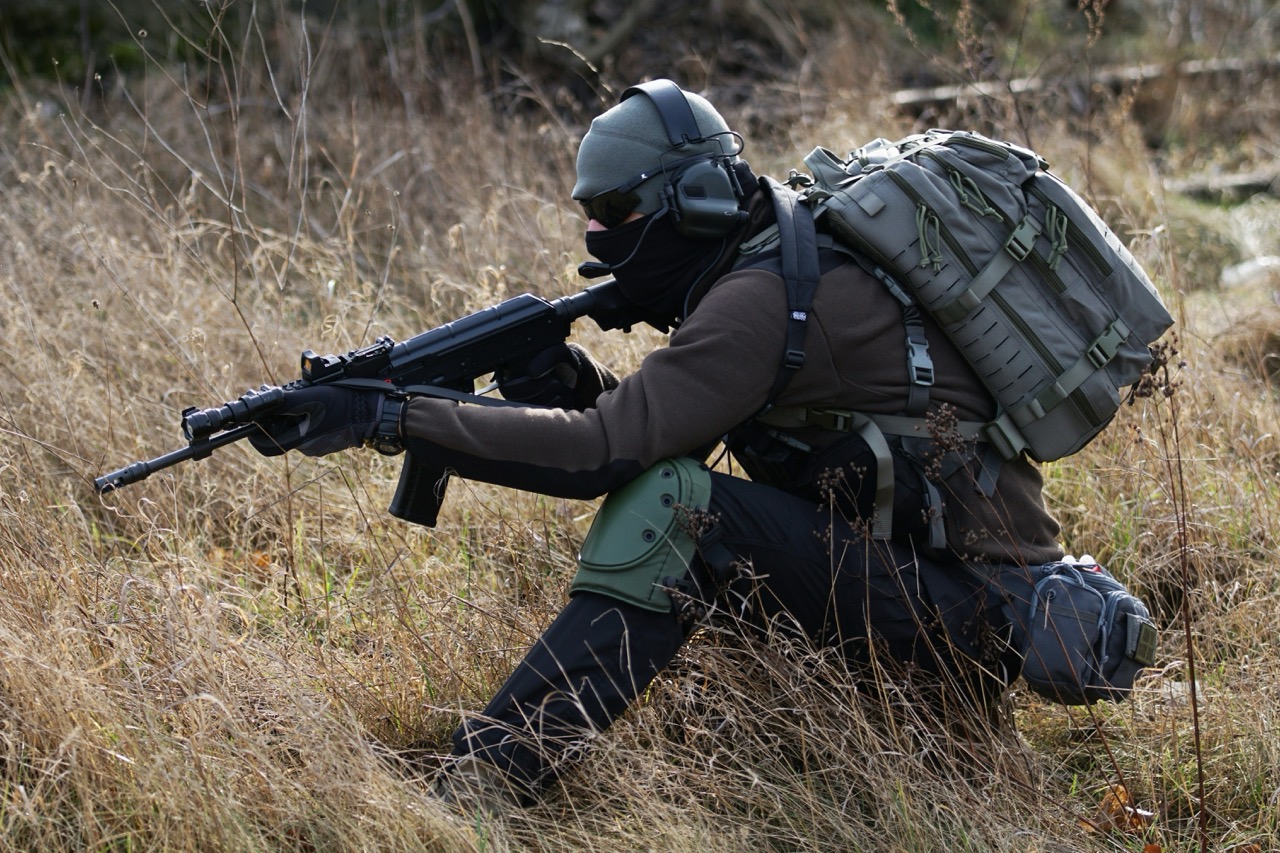
Walk onto any organized airsoft field and one of the first things staff will do is chronograph your replica, meaning they'll fire it through a device that measures the velocity of your BB in feet per second. If your gun reads too hot for the field's rules, you don't play until it's dialed back. Understanding why this matters, and what the number actually represents, will save you an awkward conversation at check-in.
What FPS Actually Measures
FPS is simply the speed of the BB as it leaves the barrel. On its own, though, velocity isn't the whole story, because a heavier BB moving at a given speed carries more kinetic energy, and hits harder, than a lighter BB moving at that same speed. That's why serious fields and players increasingly talk about energy in joules rather than raw FPS, since energy accounts for both weight and velocity together. A gun chronographed with a light 0.20g BB will read a higher FPS than the same gun shooting a heavier 0.28g or 0.32g BB, even though the energy delivered may be similar. Fields that only enforce a flat FPS number without specifying BB weight are measuring an incomplete picture, which is part of why more precise venues chronograph with a fixed, heavier test BB.
Why Limits Exist at All
The entire premise of airsoft as a hobby depends on projectiles that sting rather than seriously injure. Limiting muzzle energy keeps the sport playable at close range and reduces the risk of welts, bruising, and more serious harm, particularly to unprotected skin and, critically, the eyes. The consensus around mandatory, standards-rated eye protection in the sport exists precisely because impact injuries from small high-speed projectiles are a recognized and largely preventable category of harm, as reflected in research on sports-related ocular injuries published through the National Institutes of Health. FPS and energy limits are the other half of that safety equation: they cap how much force is delivered in the first place, while eye protection built to standards like those OSHA references for workplace eye protection handles what limits alone can't fully prevent.
Typical Limit Categories
- Close-quarters / indoor limits: The lowest limits, often paired with mandatory minimum engagement distances
- Outdoor field limits: A moderate ceiling that covers most rifles and standard replicas
- Sniper/DMR limits: A higher ceiling reserved for bolt-action or designated marksman platforms, almost always paired with a strict minimum engagement distance rule
Every field sets its own numbers, and they vary meaningfully between venues and even between countries, so the limit at one field is not a universal standard you can assume applies elsewhere.
Minimum Engagement Distance
Because energy limits alone don't eliminate risk at point-blank range, most fields pair FPS caps with minimum engagement distance rules, often requiring higher-powered replicas to only be used against opponents beyond a set distance, or to switch to semi-auto only within that range. This layered approach, a velocity cap plus a distance rule plus mandatory eye protection, is what actually keeps the sport safe rather than any single measure on its own.
What This Means for You
Before you show up to a new field, check its published FPS and energy limits and the BB weight they chronograph with, not just the number your gun read at home. Bring your replica set conservatively under the limit rather than right at the edge, since chronograph readings can vary slightly with battery charge, temperature, and BB batch. It's a much better outcome to be told you're comfortably compliant than to be sent home to adjust your hop-up and gearbox shim in the parking lot.
More from the blog
All posts →Essential Tools Every Airsoft Technician Should Own
A well-stocked toolbox turns gearbox surgery from a stressful gamble into a routine afternoon project.
August 26, 2026How to Clean and Maintain Your Airsoft Gun
A regular cleaning routine keeps your airsoft replica shooting straight and lasting longer, and most of it takes less time than a single game rotation.
August 25, 2026Radio Communication Basics for Airsoft Teams
A beginner-friendly introduction to using radios in airsoft: call signs, brevity, and the basic discipline that keeps a channel useful instead of chaotic.
August 24, 2026